 Lumivox
Oil and Fat Choices in Everyday Cooking
Introduction
Fats and oils are essential ingredients in British home cooking. They serve important functions in flavor development, texture creation, and heat transfer during cooking. Understanding the characteristics of different fat sources provides context for how they influence the nutritional composition of prepared meals.
Energy Content of Fats
Fat contains 9 calories per gram, which is more than double the 4 calories per gram contained in carbohydrates and protein. This fundamental fact about macronutrient composition means that the type and quantity of fat used in cooking directly impacts the energy density of the final dish.
One tablespoon of oil contains approximately 120 calories. One tablespoon of butter contains approximately 100 calories. These numbers are consistent across different oil and butter types, as the caloric contribution comes from the fat itself regardless of the source.
Oil-Based Cooking Fats
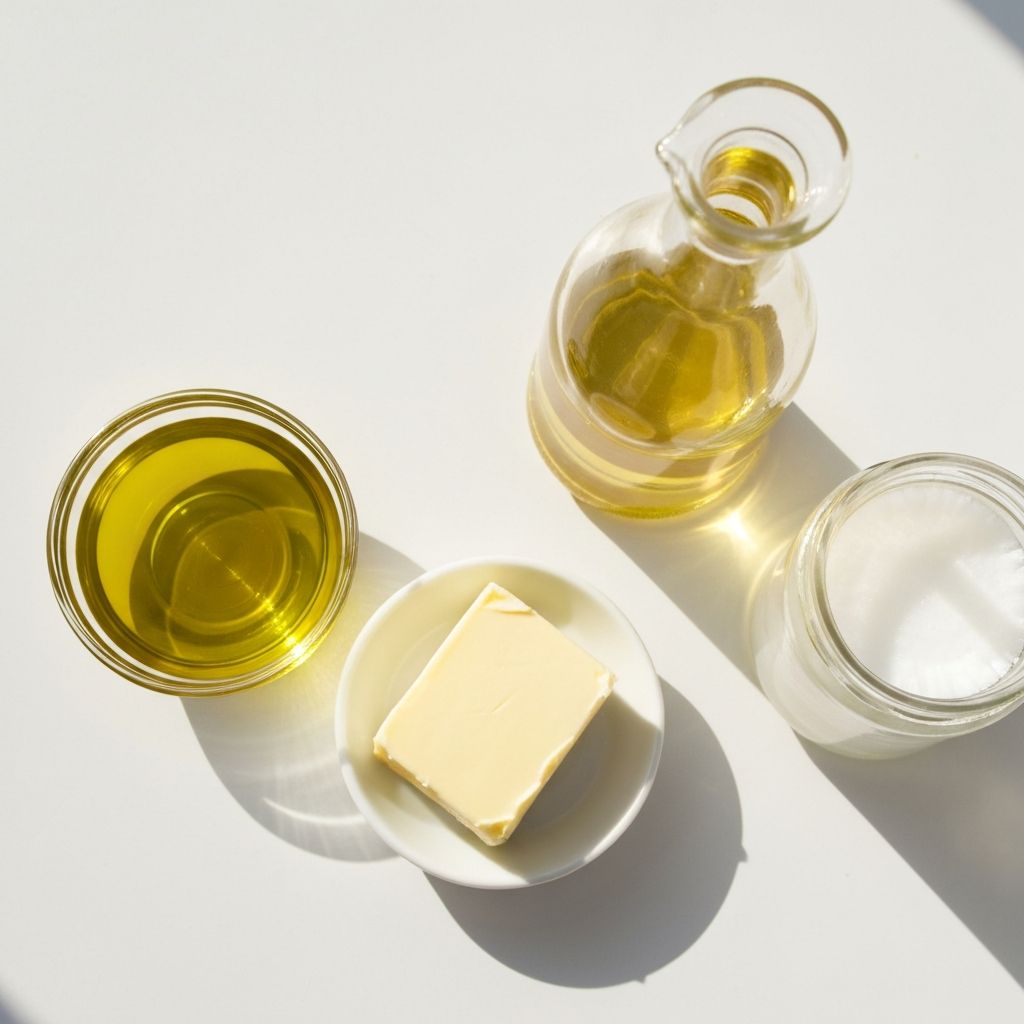
Common oils used in British home cooking include olive oil, sunflower oil, rapeseed oil, and vegetable oil. These are typically extracted from plants and consist almost entirely of fat. They are liquid at room temperature.
All oils contain approximately 120 calories per tablespoon due to their composition. The differences between oil types relate to their nutritional composition (different fatty acid profiles), smoke points (suitability for different cooking temperatures), and flavor characteristics, rather than energy differences.
Butter and Dairy-Based Fats
Butter is made from cream and contains approximately 80% fat, with the remainder being water and milk solids. One tablespoon contains approximately 100 calories. Butter is traditional in British cooking for flavor and in baking.
Other dairy fat products include ghee (clarified butter), which contains approximately 120 calories per tablespoon, and various margarines, which vary in composition depending on their specific ingredients.
Quantity Considerations
The amount of fat used in cooking significantly impacts energy density. A stir-fry made with 1 tablespoon of oil (120 calories) differs nutritionally from one made with 3 tablespoons (360 calories). A salad dressing made with 1 tablespoon of oil differs from one made with 4 tablespoons.
Home cooks adjust fat quantities based on cooking methods, recipes, equipment (non-stick versus traditional pans), and personal preferences. These variations in quantity have direct effects on the final nutritional composition of dishes.
Fat Absorption in Different Cooking Methods
The amount of fat absorbed or retained depends on cooking method. Pan-frying absorbs some oil into the food. Baking with minimal oil added results in less fat in the final product. Salad dressings and marinades are controlled additions of fat where the quantity is explicitly measured.
Deep-frying results in significant fat absorption. Steaming and boiling use no added fat. These are factual differences in cooking techniques and their interaction with fats.
Flavor and Palatability
Different fats contribute different flavors to dishes. Olive oil provides a distinctive taste suited to Mediterranean-influenced British cooking. Butter contributes rich flavor important to many traditional dishes. Neutral oils allow other flavors to dominate.
The sensory experience and enjoyment of food prepared with different fats varies among individuals. There is diversity in preference for fat-based flavors in British home cooking.
Storage and Stability
Different fats have different shelf lives and stability characteristics. Olive oil degrades with age. Butter can be stored long-term when kept cool. These practical considerations influence which fats home cooks choose for their kitchens.
Historical and Cultural Context
Traditional British cooking often used butter and animal fats (lard, dripping). Contemporary British cooking incorporates a wider range of oils. Both represent legitimate cooking traditions reflecting ingredient availability and cultural practices at different times.
Nutritional Profiles Beyond Energy
Beyond energy content, different fats contain different fatty acid compositions. Some are higher in saturated fat; others contain more unsaturated fat. These compositional differences are relevant to nutritional science but do not change the energy content (calories) of the fats.
Summary
All fats contain the same energy density (9 calories per gram) regardless of source. The type of fat chosen affects flavor, cooking characteristics, and specific fatty acid composition. The quantity of fat used directly impacts the energy density of prepared meals. These are factual aspects of how different fats function in cooking.