 Lumivox
Herbs and Spices in Flavour Building
Introduction
Herbs and spices are among the most energy-sparse ingredients in cooking. They provide significant flavor contributions to dishes while containing minimal caloric content. Understanding how herbs and spices function in British cooking provides context for how flavor can be developed and maintained in various preparations.
Energy Content of Herbs and Spices
Dried herbs and spices contain calories—typically approximately 250-350 calories per 100g when in their dry concentrated form. However, the quantities used in cooking are measured in small amounts: teaspoons and tablespoons rather than cups or ounces.
One teaspoon of dried herbs or spices contains approximately 5 calories. A tablespoon contains approximately 15 calories. The quantity used in a recipe to serve 4-6 people might be 1-2 teaspoons. When divided among servings, herbs and spices contribute negligible calories to the final dish while providing substantial flavor.
Fresh herbs are even less energy-dense than dried herbs because they contain water. A handful of fresh herbs contains approximately 1-5 calories, depending on the herb.
Fresh Herbs in British Cooking
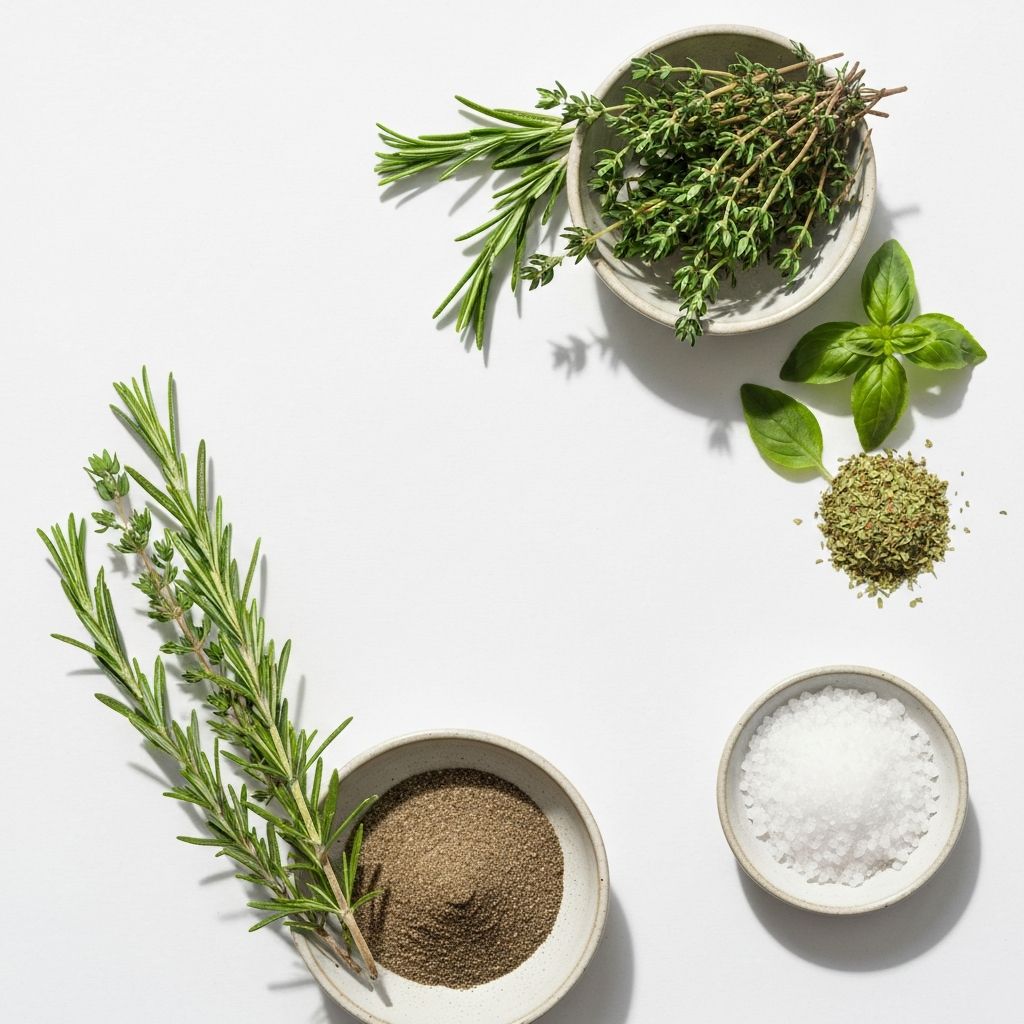
Fresh herbs commonly used in contemporary British cooking include rosemary, thyme, parsley, basil, oregano, and cilantro. These herbs are used in stocks, in cooked dishes, as finishing garnishes, and in dressings. They contribute distinct flavor profiles and are often associated with specific dishes or cooking traditions.
Using fresh herbs provides flavor intensity without adding fat or significant calories to dishes. This has made herbs increasingly prominent in contemporary home cooking.
Dried Herbs and Seasonings
Dried herbs concentrate the flavor of fresh herbs through water removal. Dried herbs are shelf-stable and provide consistent flavor year-round. Traditional British cooking often used dried herbs when fresh herbs were not available seasonally.
Common dried herbs in British kitchens include dried thyme, oregano, bay leaves, and mixed herbs. The intensity of dried herbs differs from fresh—generally 1 teaspoon of dried herb equals approximately 1 tablespoon of fresh herb.
Spices in British Cooking
Spices in British cooking include black pepper, cumin, turmeric, paprika, curry powder blends, mustard powder, and others. British cuisine includes traditional spices (black pepper, mustard) and spices from colonial food traditions (curry spices, cinnamon, cloves, ginger).
Spices contribute flavor without any fat content and with negligible calories. One teaspoon of curry powder contains approximately 8 calories and serves to flavor an entire dish.
Salt as Traditional Flavoring
Historically, salt was the primary seasoning in British home cooking and in traditional preservation methods. Salt contains no calories. It provides flavor but also has health considerations that have influenced contemporary cooking approaches.
Contemporary British cooking often uses herbs and spices alongside or instead of large quantities of salt, maintaining flavor intensity while changing the sodium content of dishes.
Vinegar and Acidic Flavorings
Vinegar, lemon juice, and lime juice are acidic flavorings used in British cooking. Vinegar contains approximately 18 calories per tablespoon, and the amounts used are typically 1-2 tablespoons in a dressing or sauce serving multiple people. Lemon juice contains approximately 4 calories per tablespoon.
These acidic ingredients enhance other flavors in dishes and contribute minimal calories while providing substantial flavor impact.
Stock-Based Flavor Building
Traditional British cooking uses stocks and broths to build flavor in sauces and cooking liquids. Stock—whether meat-based, vegetable-based, or fish-based—provides savory flavor with minimal fat (if properly prepared) or moderate fat depending on the type. The caloric content of stock varies based on how it is made and what it contains.
Using stocks to build flavor provides an alternative to cream-based sauces for developing complex flavor profiles.
Condiments and Flavor Additions
British cooking incorporates various condiments: mustard, Worcestershire sauce, soy sauce, and others. These are used in small quantities to enhance flavor. Mustard is essentially calorie-free. Worcestershire sauce contains approximately 11 calories per tablespoon. These quantities are used in amounts that contribute negligible calories to overall dishes.
Flavor Development Without Added Fat
Using herbs, spices, and other seasonings to develop flavor allows cooks to create satisfying, flavorful dishes without substantial fat additions. This approach is increasingly common in contemporary British home cooking, reflecting both changing ingredient preferences and health considerations.
Tradition and Contemporary Practice
Traditional British cooking sometimes relied on salt-heavy preparations and cream-based sauces. Contemporary British cooking incorporates a wider range of herbs, spices, and flavor-building techniques reflecting global influences and ingredient availability. Both approaches are found in contemporary home cooking.
Summary
Herbs and spices are energy-sparse ingredients that provide substantial flavor to dishes. Using them to develop flavor provides an alternative to developing flavor through fats and salt-heavy sauces. These are factual observations about how herbs and spices function in cooking rather than prescriptive guidance.